|
Dr Martin Dore
0 Comments
Unfortunately the supply of Diamorphine has been challenging over recent months and at times our stock has ran out. Although it is fantastic drug to treat children with moderate to severe pain there is an alternative that it just as good - INTRANASAL FENTANYL We have a new departmental guideline on the use of IN fentanyl on the tree of knowledge under Anaesthetics/sedation analgesia. The Key points can be found below: 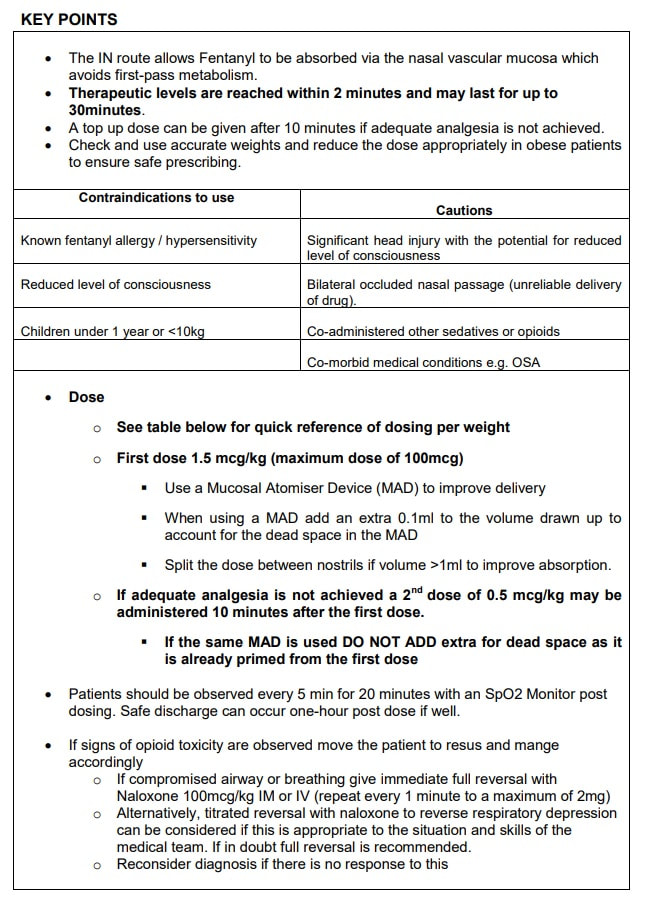 Martin Dore 17/02/22
RCEM 2022 Guideline
Summary of Recommendations 1. All Emergency Departments (EDs) should be familiar with the term Acute Behavioural Disturbance (ABD) and the recognition of potential cases. 2. All EDs should have a locally agreed strategy for the management of cases of ABD. 3. All EDs should have an identified area suitable to provide verbal and environmental de-escalation of ABD cases when required. 4. All EDs should have 24/7 access to sufficient security staff to provide support. These staff should be appropriately trained to provide additional de-escalation and where appropriate, restraint of patients to support clinical care. Where this is not provided, the Trust should clearly describe any alternative provision and how this fulfils the requirements of the Health and Safety at Work Act 1974. 5. Early sedation should be considered in severe cases of ABD, including where prolonged activity or restraint has taken place. 6. In most cases of ABD requiring parenteral sedation, intramuscular ketamine or droperidol are recommended agents. https://rcem.ac.uk/wp-content/uploads/2022/01/Acute_Behavioural_Disturbance_Final.pdf Steve Fordham Feb 2022 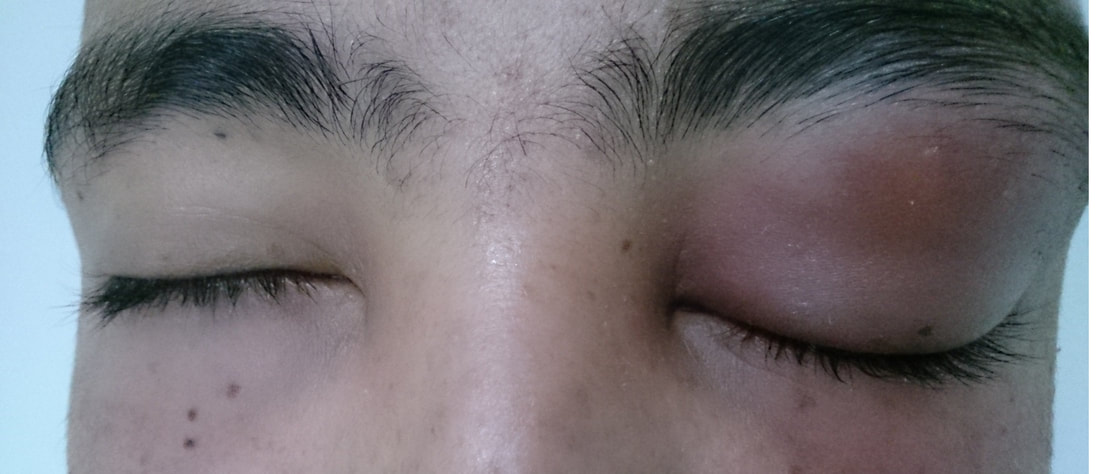 Presents with significant Eyelid oedema and erythema. (patient may not have a fever)
Look for RED FLAGS: Proptosis chemosis Ophthalmoplegia Painful eye movements Altered visual acuity or blurring Relative afferent pupillary defect Systemically unwell If post-septal cellulitis suspected (Red flags present) investigations include: bloods, blood cultures, IV abx (local guidance important), referral to ophthalmology and Paediatrics +/- urgent Contrast CT orbits . Surgical drainage may be required if the symptoms fail to respond to IV Abx Further reading: Periorbital Vs Orbital cellulitis by Don't forget the bubbles Eye infections from RCEM learning Martin Dore Jan 2022 https://litfl.com/vt-versus-svt-ecg-library/
LIfe in the Fast Lane blog looking at ways to decide if your patient has a VT or and SVT. Ryan/Fordham Dec 2021 Yvette highlighted a change to management for skin tears. Please see the flow diagram below (this poster can be found around the department): 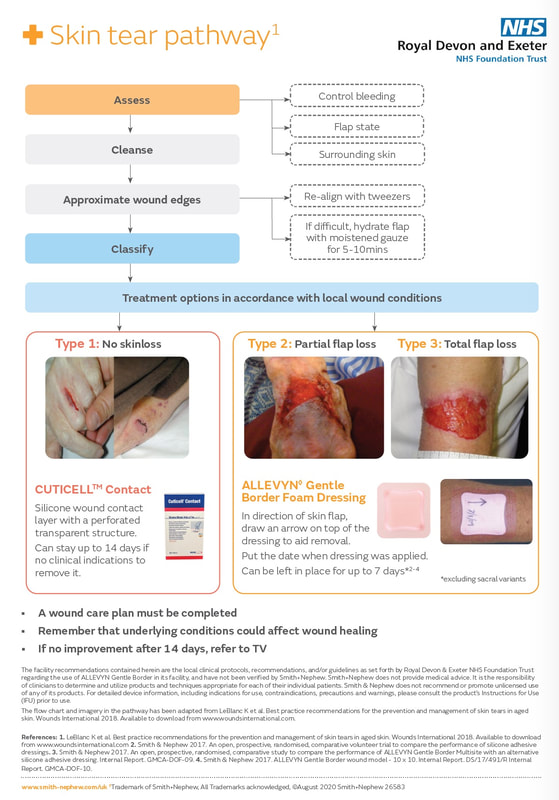 Additional resourcesVideo on how to apply a zimmer splint (dorsal blocking splint) HERE
Don't forget the bubbles have a fantastic blog post on finger injuries in 2 parts (hyperlinks below), Its a paediatric blog but the learning is transferrable to adult injuries. Part 1 - Basics and bones Part 2 - Tendons and ligaments Jo Mclaughlin March 2021 A patient presented with an LVAD (Left ventricular assist device), thankfully the patient was well, but many questions were asked regarding what we would do if the patient was unwell. An LVAD is a device that is implanted in patients with end stage heart failure, often as a bridge to heart transplantation. The device acts as a pump for the heart and assists cardiac output, with the pump working correctly these patients will be well perfused but may not have a pulse. Patients with these devices are rare but present a unique challenge when presenting with an LVAD emergency. Life threatening LVAD emergences include device failure, stroke, bleeding, LVAD thrombosis and systemic infection. National guidelines on the management of patients with these devices are scarce however there is a really helpful article in the EMJ, published by C.Bowels et al in 2017 which is definitely worth a read. Here are the suggested algorithms from the article for an unwell patient with an LVAD: 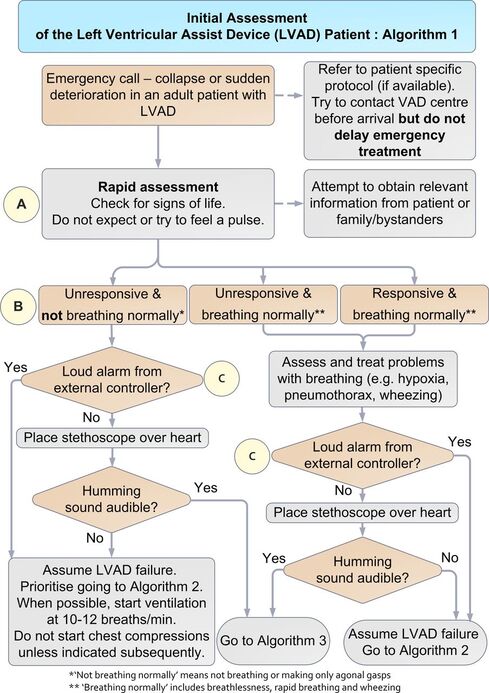 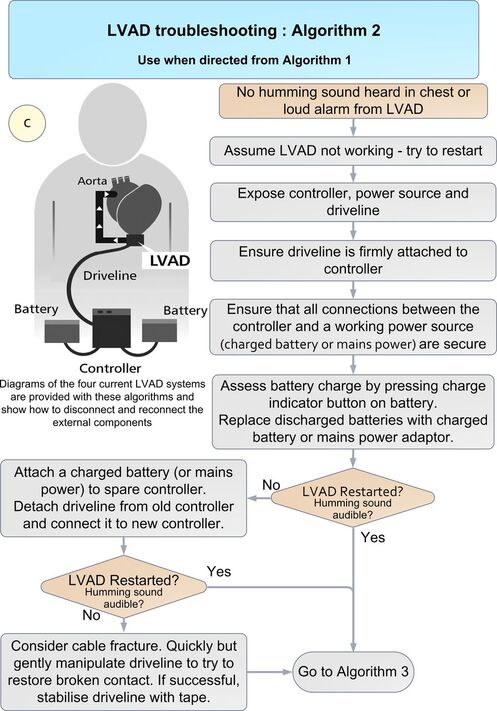 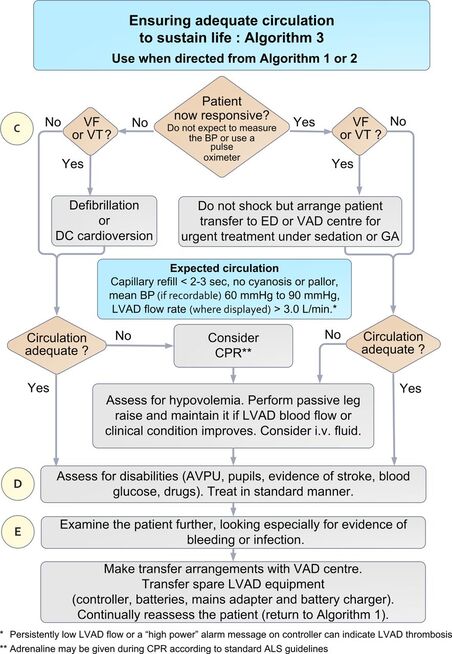 The article can be accessed Here
Bowles CT, Hards R, Wrightson N, et al. Algorithms to guide ambulance clinicians in the management of emergencies in patients with implanted rotary left ventricular assist devices. EMJ 2017;34:842-8 A brief PowerPoint presentation on the pathology and management of patients with Cyanide poisoning.
Uploaded 10/3/2021 by Lewis Jones |
This will be an archive of learning blogs and lunchtime learnings bites!
Archives
February 2023
Categories
All
|
 RSS Feed